
An Unbelieving Ghost
12 things I found in February

Every last Wednesday of the month, I’ve been sharing a dozen of the best things I found out there. Writing. Music. Podcasts. Films. Gear. Recipes. The intent is to maintain a punchy counter against the algorithms and to amplify the beautiful work of others. Here’s a link to previous lists so far.
12 Things I Found This Month
DEATH. I’m currently in the San Francisco Bay Area, tending to my mother who took a catastrophic fall a few days ago and has a punctured lung, dislocated shoulder, and all sorts of other troubling health concerns. It’s going to be a long road to recovery of her, someone who I love immensely. (I write about her in The Way Around; the book’s dedicated to her.) This recent Atmos podcast episode, hosted by editor-in-chief Willow Defebaugh, is with death doula, Alua Arthur, and I found the conversation helpful, illuminating, and refreshing as we all consider aging, decay, and how mortality is exactly what makes life worth living, an enduring source for compassion and radical presencing. (I’d originall found Arthur on this episode of 10% Happier.) At one point, Defebaugh quotes Richard Powers, who says: “Death is the greatest invention of life, because it keeps itself going,” to which I stopped in my tracks.
GODS. One of the few daily emails I read every day is The Poetry Foundation’s Poem of the Day. They’re (mainly) bangers, and they start my day off with expert songlines of verse. I have a whole shelf in my reading nook dedicated to poetry, at eye level with my meditation cushion (i.e. where Monkey Mind decides to jump around like a feral beast most mornings). This poem, “I Imagine the Gods,” by Jack Gilbert, really caught my attention: “Let me fall / in love one last time, I beg them. / Teach me mortality, frighten me / into the present.”
RED. I can’t stop recommending Nick Estes’s book, Our History Is the Future, especially this year, the tenth anniversary of Standing Rock, which was a moment in a long history of Indigenous resistance. (I wrote this piece for Terrain.org after organizing a supply run there in 2016.) Estes’s Substack is wonderful, as well as the podcast, The Red Nation. I found his episode on Manifest Destiny required listening, too, which I listened the same week the Big Sky Film Festival was in town in Missoula – such a crazy wonderful festival – where I caught the film “Ni-Naadamaadiz: Red Power Rising,” about Canada’s own armed occupation of Anicinabe Park in Kenora, Ontario, in the 1974.
GEESE. Not to be confused with Goose, another band I’ve grown to love despite my strange hesitation to lean fully into Phishy jammy stuff. I feel like I’m seeing Geese, the phenom Brooklyn-based rock band, everywhere these days, so forgive me if I’m just now singing their praises for you. A friend whose taste I value sent me their most recent record, and I listened the whole way through, several times, and was promptly stunned by its fullness, its risk-taking, its liberated sound. Try my fave track, “Bow Down,” “Long Island City Here,” or, perhaps appropriate for the impending season, “Taxes.”
HANIF. I’ve read several memorable essays from the great Hanif Abdurraqib — recently he’s come up after enjoying him as guest editor for Orion’s episode on the natural rhythms of hiphop, and being a creative advisor for this stunning podcast on Fela Kuti – but I hadn’t yet read They Can’t Kill Us Until They Kill Us, which had been staring at me on the shelf for months. I’m currently halfway through a reading-listening hybrid (listening to the audio book, narrated by Abdurraqib with off-script tee-ups before most essays, is a joy) and his writing on pop punk, revenge fantasy, and male loneliness had me stunned and seen in my adolescence. My Chemical Romance, Taking Back Sunday . . . you get it. Now maybe I can move on from this month’s obsession with how good AFI’s Sing the Sorrow record was (the band at their best, though Shut Your Mouth and Open Your Eyes might be their punkiest best). Abdurraqib: one of the best essayists of our time.
ORION. Speaking of Orion, last week I wrote a little ditty on IG about my 15-year-old love affair with the magazine, and how I’d ended up working for them for five years. I still get behind the statement that they are the best nonprofit, ad-free print magazine in the world dedicated to celebrating and defending a just and viable planet. This summer I’ll be teaching a nonfiction workshop at their annual in-person event, June 14-19, alongside a crazy-talented lineup of authors. Omega Institute. Rhinebeck, New York. Accessible by train from the city. Reasonably priced, especially if you jump on scholarships (due 3/1) and early bird pricing (3/15). Come play? (Here are some articles I’ve worked on with them.)
SPRINGSTEEN. There’s no better compliment than someone telling you that your mannerisms sometimes resemble those of Jeremy Allen White. (If anything, I think it’s the nose we share.) Though not necessarily a Springsteen evangelist, the new biopic of Springsteen: Deliver Me from Nowhere, was a knockout, especially in a genre that’s so hard to do well. (Straight Outta Compton was another that I totally loved.) White delivered the goods, again, as anyone who knows me knows I adore The Bear. Humble. Committed to the craft. A student of authentic emotion. Care for the story. Svelte AF. All of it’s there in this film.
SALMON. I’ve been really excited about the work we’ve been up to at Magic Canoe this past year — a bioregional storytelling platform focused on Indigenous values and sovereignty, regenerative economies and ecologies, and wild salmon. We’re currently helping promote the first-ever IMAX film following the impossible journey of wild Pacific salmon, which they only recently launched a trailer. Friend and Radiolab host Lulu Miller also recommended this film about salmon, “Wild Summon,” which I found disturbingly wonderful, and have plugged in a previous roundup. Related teaser: Last week I interviewed Suzanne Simard (Finding the Mother Tree) about her forthcoming book, When the Forest Breathes, and found Simard humble and committed to the real work. Look for my interview on Magic Canoe next month around pub day (3/31), and pre-order your copy.
DIG. Jacobin’s podcast The Dig gets a lot of airtime on my podcast consumption these past years, and this recent two-part interview, “Breaking the Machine with Peter Linebaugh,” and “The Commons” really nailed it. I’ve written a bit on rewilding and the privatization of the commons, and Linebaugh traverses a ton of history to situate us in these times. The Dig’s interviews are always deeply researched, which makes me grieve the recent loss of Michael Silverblatt (Bookworm) and celebrate in-depth interviewers like Talk Easy’s Sam Fragoso and Between the Cover’s David Naimon.
MERRELL. This behemoth of an outdoor company usually isn’t known for offering the top-shelf best in trail running performance, but they recently sent me their latest offering, the Agility Peak 6, which have become a welcome addition to the lineup. No hiccups. No extra bells or whistles. Feels like you could put 1,000 miles on them and they’d hold up. Nine ounces. They arrived around the same time my pair of new Speedgoat 7s arrived, and I find myself reaching more for the Merrells. (Somehow the Speedgoat’s cut runs small now?) I still think NNormal’s Kjereg 2s are my best trail shoe of the last several months.
AI. The breakneck hot takes and think pieces coming out about AI is truly overwhelming, and I’m far from smart enough to know where we’re going with all this — no one does, I’d argue — but I do know that Tristan Harris is probably one of the most lucid metabolizers and communicators for a popular audience. Peep his 15-minute TED talk, then terrify yourself with the newly released trailer for this forthcoming documentary on AI, out next month. For the best in longform, check out this piece in The New Yorker, “What Is Claude? Anthropic Doesn’t Know Either,” by Gideon Lewis-Krauss (Fact: I was on this guy before The New Yorker was, with his book, A Sense of Direction: Pilgrimage for the Restless and the Hopeful, which I referenced a ton to organize my own memoir.)
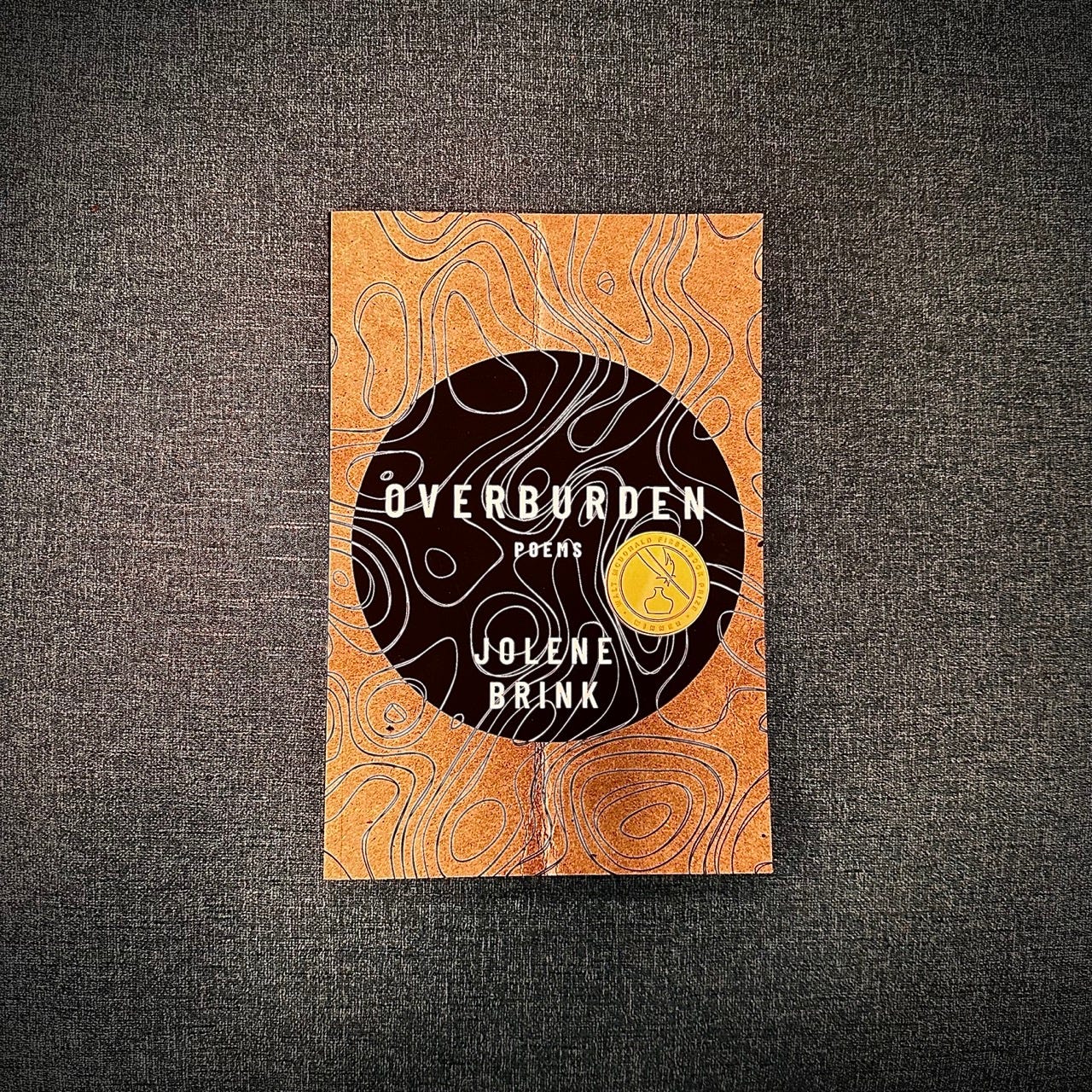
MANDORLA. This month, I’ve made a record four entries (!) for the Mandorla 200: Our History Is the Future, The Sound Atlas, A Darker Wilderness, and here, below, Overburden, a most exquisite new book of poetry by a dear friend and brilliant voice, Jolene Brink, out now.
Here’s my 200-word micro-distillation:
The deliverance of it all. The letter being sent, the mail being received, a child’s arrival amid viral flames of the day. Nothing will ever be the same. No way to put it back, no way to reverse the futures now surfacing. Look around: these are landscapes built entirely on memory, on passionate love and second chances, dead ones and live ones early to the party and intent on staying late, impatient futures excavated in order to tend to and to be with, to care for. What’s the song of the day when each day is sheer accumulation, layers of belonging? The opacity! The immensity! Playful ghosts wedged between rock and glittered bounty. Dig. Stay awake as we travel through these layers together, the multiple truths, falling in love using the same damn eyes that weep for joy and for loss, the dead placed on moss altars like a sword that tried. This world rotates without end, doesn’t stop, decay and newborn awe both reliable fuel sources. It will not stop, so reach for it. Reach for the dead in order to live. Reach for what’s beneath, just don’t forget to offer what love you’ve found back to the Earth, to another—now.
The Book: Overburden
The Author: Jolene Brink
The Publisher: Texas Tech University Press
The Tip: Jolene Brink
The Film “Wild Summon” is great, but also truly weird and disturbing. My daughter and I saw it when it was nominated for a short animation Oscar. Last night it came up in conversation. What kind of obsession does it take to make a thing like that? We wondered if either one of us has it in us.