
Ancestors in Training
12 things I found in January

Every last Wednesday of the month, I’ve been sharing a dozen of the best things I found out there. Writing. Music. Podcasts. Films. Gear. Recipes. The intent is to maintain a punchy counter against the algorithms and to amplify the beautiful work of others. Here’s a link to previous lists so far.
12 Things I Found This Month
MOLA. In 2014, I spent the better half of a month crossing the Tibetan plateau alongside Ian Baker and a group of 16 others to circumambulate Mount Kailash. The account sets up the first round in The Way Around, and the landscape still haunts me, taunts me, finds me in dreams and in certain aspects of mountain shadow. This film, Mola, found me in tears by the end. It’s a simple conceit: a Tibetan woman living in Switzerland takes care of her mother, a 100-year-old Buddhist nun in exile whose final wish is to die in Tibet, a place she hasn’t been able to return. A must-watch. Available on Kanopy (please tell me you’re into Kanopy.)
LAMB. Look around your kitchen. All you see is ground lamb, butternut squash, one bouquet of kale, and onions. What do you do for an upcoming gathering? What. Do. You. Do. Stew, of course. This spiced ground lamb stew recipe (we added extra stuff but a great point of departure) was fifty times better than I could have imagined. If you’re not a fan of lamb, this is a banger place to start.
STRIKE. Being devastated and enraged and frankly stunned by the events in Minneapolis, I was deeply moved by Friday’s citywide general strike (and got leads from friends in MN that MIRAC and UNIDOS MN are two trusted places to donate if you can), and that estimates of 50,000 took to the streets. (Note: temperatures that morning were -20F.) Curious about the history of U.S. general strikes — this was the first of its kind in the U.S in 80 years — I found this piece in Jacobin on the history of general strikes in the U.S. to be helpful. Jacobin’s podcast, The Dig, is in regular rotation, too.
ARENDT. Speaking of encroaching fascism, a recent PBS documentary, Hannah Arendt: Facing Tyranny, on the life of German-born author and philosopher Hannah Arendt, was eerie and salient, in many ways, to the current rumblings of the day. I’ve always been supremely moved and challenged by Arendt’s work and writing style, her intellect always nutritious. On Revolution (1963) was referenced in my book, and I’m currently working my way through The Human Condition (1958), considered by Arendt-completist friends to be her best.
TITANIUM. With some upcoming long walks in wild places, I’ve been keen to upgrade backcountry cookware, and Snow Peak’s Ti-Single 450 Cup and Trek 700 Titanium were two new companion pieces that will streamline an already light walking system. I’m far too late to the Japanese ultralight aesthetic, but after exhaustive research, these Japanese-made campwares can’t be better designed.
SEEDS. Last fall, I had the joy of facilitating an evening writing workshop for Writing the Wild, hosted by Krissy Kludt and Drew Lanham (a great short film, “A Mystical Ornithology,” on Drew for Emergence, recently.) This winter, I’m joining as a student for a very special three-part series with Rowen White, “Echoing the Land’s Language: Writing into Kinship with Place.” White is a Mohawk (Kanienʼkehá:ka) seed-keeper and storyteller, and her Substack is one of the few newsletters I never skip. Also, a bump for you to consider engaging with Writing the Wild’s many offerings — they’re exquisitely done.
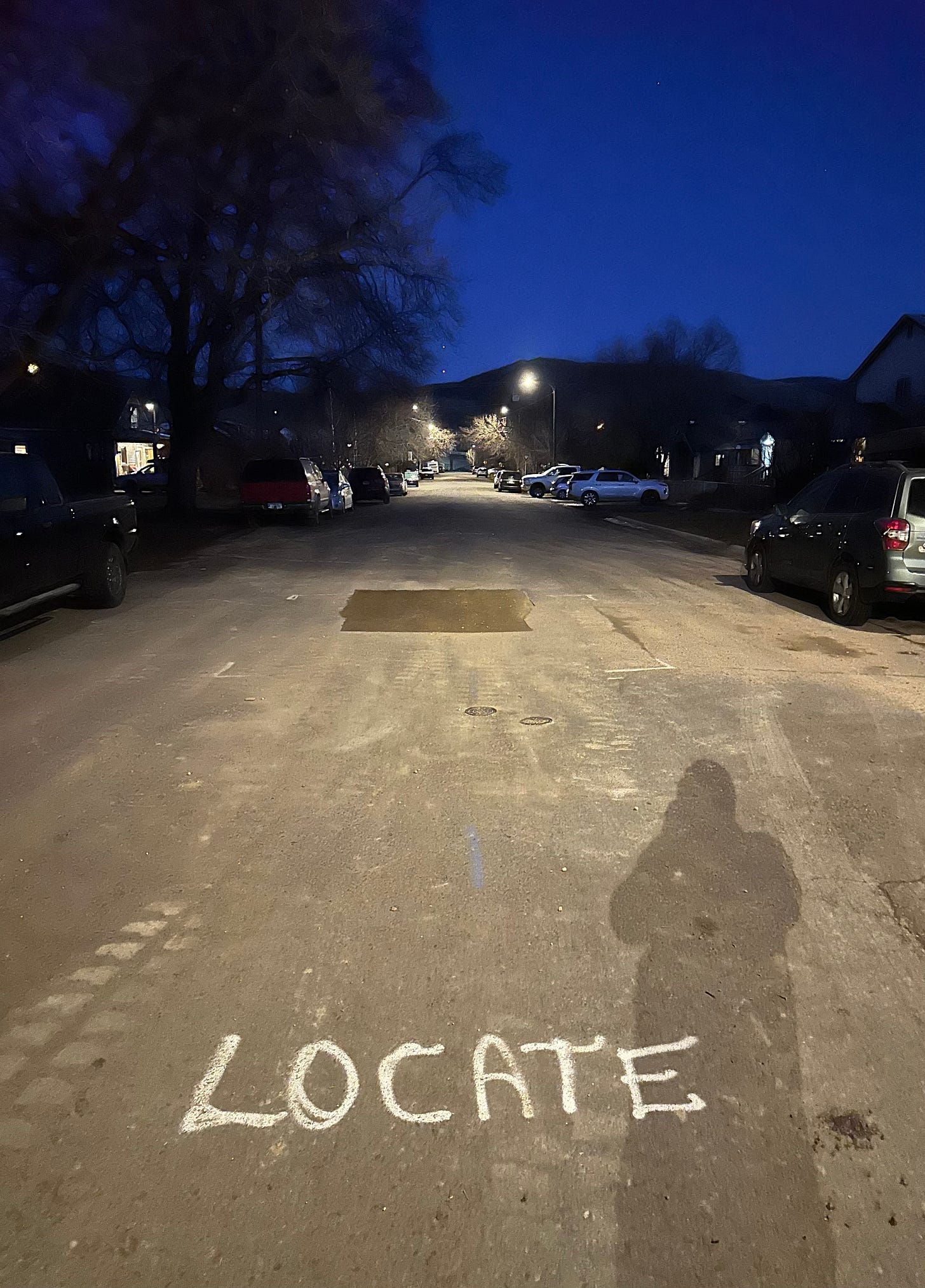
DECAF. Hear me out. I’m three weeks into a caffeine-free experiment and it’s going . . . well. (I wrote about it, sort of, here, which turned out to be the most-read Jasmine Dialogues dispatch yet. Apparently, people FEEL THINGS about their drugs.) As someone who’s roasted coffee and who’s traveled to four continents to visit coffee farms, it’s been incredibly instructive and, strangely, far smoother than I expected. Better sleep is the clearest gain here. Also, less of an energetic rollercoaster. Anyway, the process of decaffeinating coffee can be nasty so I nerded out on the matter and it’s all about Swiss Water Process. (100% chemical-free. Here’s a 2-minute video on how it’s done.) Three best decafs I’ve found that use this method: Doma, Verve, and (perhaps the winner), Sightglass.
BERRY. The other night I woke up at 3 a.m. to the booming sound of Wendell Berry’s voice from downstairs and it was perhaps the most terrifying moment I’ve had in years. Turns out, my monitor had somehow turned itself on and re-played a YouTube interview of the legendary farmer-poet. It wasn’t entirely unusual because a) I’m an absolute lover of Wendell Berry, especially when he talks about shooting drones out of the sky with a shotgun, and b) I’d just watched the keynote lecture by author Paul Kingsnorth at The Berry Center. Kingnorth is all over the map for me right now, but I remain curious about his creative, political, ecological, and more recently, spiritual insights. Worth the watch.
ICE. There’s a metric ton of media being thrown at us by the half-second about ICE, immigration, etc. and I certainly haven’t traversed the entire landscape of moving narratives coming out of Minneapolis, but I was deeply touched by this first-hand account, “Watching America Unravel in Minneapolis,” by Charles Homans, paired with exceptional photography by Philip Montgomery. (Gift article.)
KLAMATH. Anything Ben Goldfarb touches turns to gold, and his latest essay, “A River Reborn,” in Emergence about the Klamath Dam removal was expertly done. (I actually listened to it and was fully engrossed.) It shared a few flavor notes with “A Small King,” which I wrote for them last year, but with some striking photography and deep reporting. Beavers, road ecology, unfucking rivers — Goldfarb’s on it.
100. The New Yorker comes hot and fast each week and I can often only read a few features at best. (I do love their app and recommend it.) I’m loyally subscribed for more than a decade now, and this documentary on the 100th anniversary of the magazine (Netflix; trailer here) was catnip for someone who works in publishing, and has obviously daydreamed of one day finding my name in its pages. Regardless, anyone will find this deep dive in The New Yorker’s history, present status, and future outlooks to be really compelling.
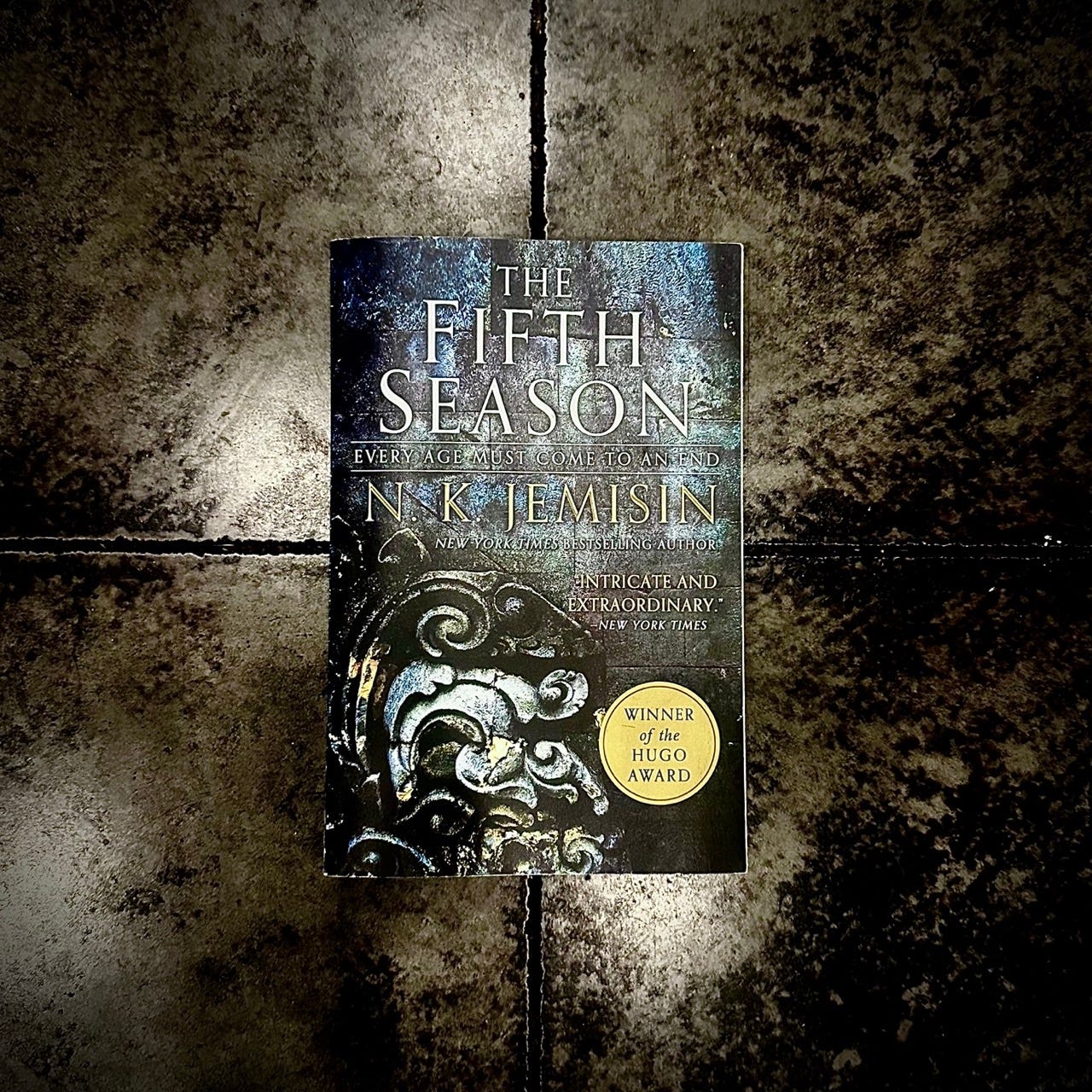
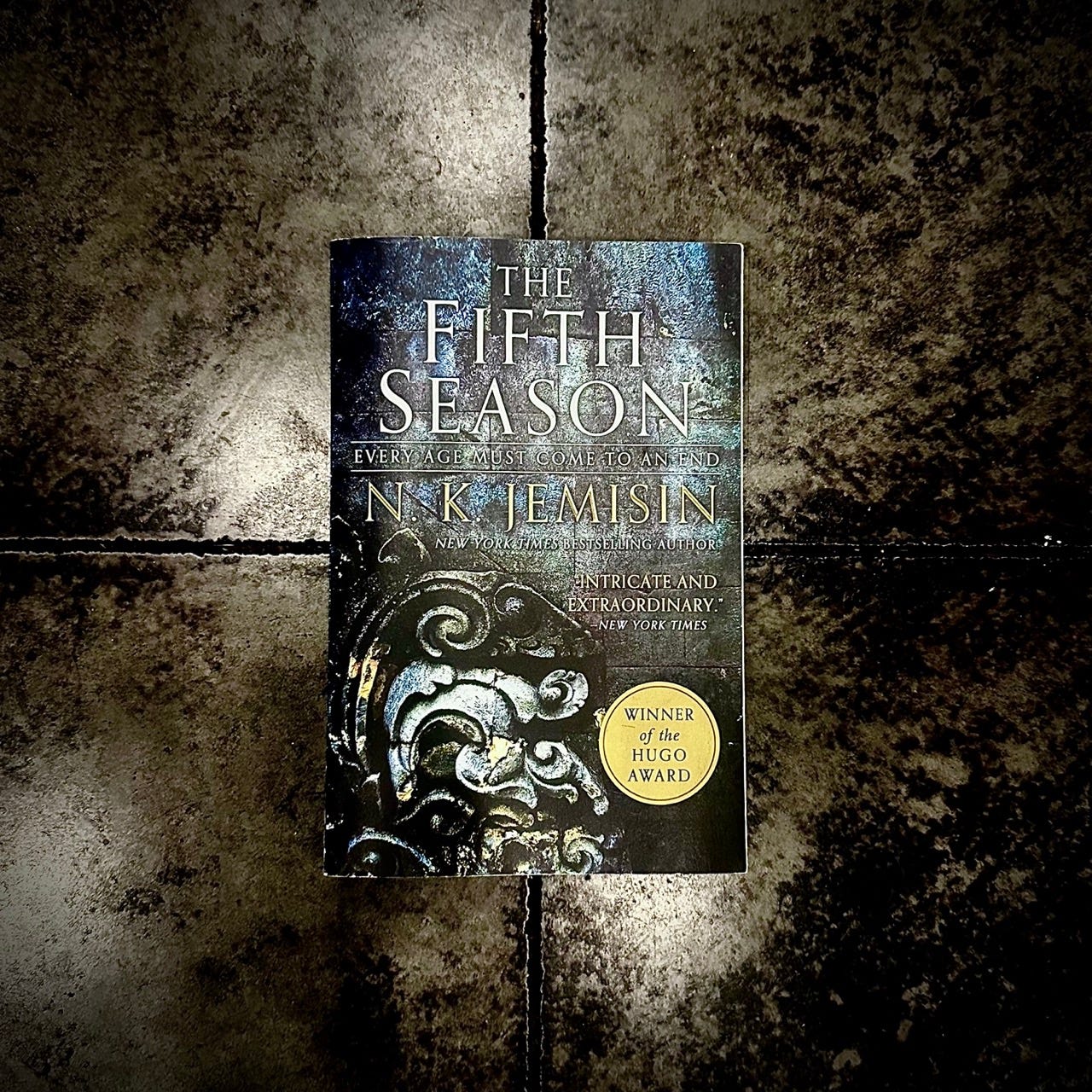
JEMISIN. Here’s the 132nd Mandorla 200 book on “ecology, justice, and place-belonging for our times,” and its 200-word micro-distillation. So many people recommended N.K. Jemisin’s The Fifth Season to me, and I just now found my way to it. First-ever Black woman to win the Hugo, and first-ever author to win three consecutive Hugo Awards for the Broken Earth Trilogy. I’ve never traveled through a protagonist’s body, down into a planet’s tectonic underworld and back so powerfully on the page.
I’ll leave you with this seed packet . . .
A rupture in the psychic supercontinent. Molten rip, lava spew. Whatever stitched this whole world together is being forgotten in an urgency to survive. And who’s called to keep pre-existing systems of power from unraveling? The oppressed. Tell me about the collective nervous system of such a place and I’ll show you structures of hegemony continuing to traffic in fear, always bracing for impact atop ancient flows of heat and geo-violence underfoot. This is a combustive place, this earthen psyche. Volatile. Are you surprised to find a place so responsive? Planets are gods and know nothing of stasis. Oppression sustains when we name another subhuman, utility only to maintain a stillness, a status quo. Earth used to birth and kill life in steady rotation—nothing personal—but now humans arrive with drills and take without replenishment and plunge until the gods are cracked open and now, now seasons move off-kilter. So hold on. Keep the stitches from popping. Hold it together, despite smoke coming in through the vents, and remember it’s workers who will tend and who mend this superstructure, who wield true power to move mountains, to endure the endless rounds of apocalypse, to survive. We are tectonic, too.
When you say that Paul Kingsnorth is "all over the map" I suppose you mean he has some ideas that seem uncomfortably aligned with conservative politics, yet you still find his ways of overthinking everything compelling. So do I. When I cited Kingsnorth in this essay on Re-Localizing the Library (https://journals.litwinbooks.com/index.php/jclis/article/view/94) the editor called me up to ask if I knew Kingsnorth is a fascist. I said that I know that he has been accused of being a fascist because, yes, folklore can be co-oped as nationalism. However, I also think Kingsnorth is fundamentally right about the value of Prayer, People, Past and Place. I am also sympathetic with his cranky disapproval of surgical/medical body modification because my lived experience in a female body has put me in conflict with a medical system that treats my basically healthy, well-functioning body as a pathology. Wendell Berry also held some uncomfortable conservative views -- for example I do not agree with Berry 's anti-abortion essays. Nonetheless, I moved home and stayed home largely because of Berry's admonition to choose a place and try to form a relationship with that place. He is right about that.
Always enjoy these dispatches. The Goldfarb piece was excellent.