


So I started to text my mother again.
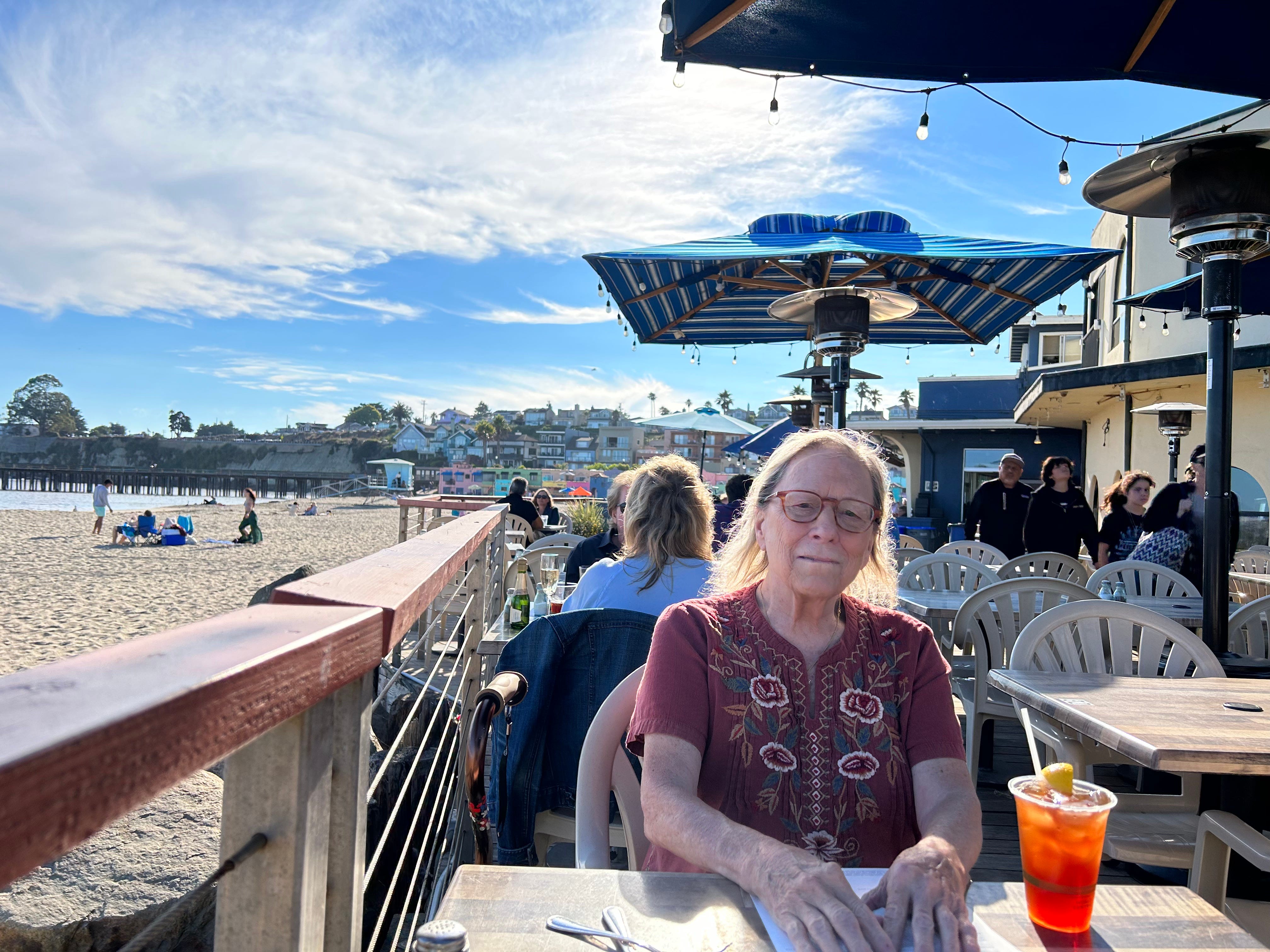
The thing is, she passed away on March 31, age seventy-five, from complications of COPD and a fall that pierced her lung, plus several other colliding ailments.
Now I’m aware of how strange that sounds, so let me explain:
I’ve shared this before but my mother, Denise Carter Triolo, was once a top women’s tennis player in the world, playing on courts alongside Billie Jean King, Arthur Ashe, Chris Evert, and many others.
Tennis was her entire life for a while, but then came other interests — having a family, photography, being in the woods — and she let that chapter go. It was a difficult identity divestment that caused her great pain and confusion, but it also brought some of her life’s greatest joys.
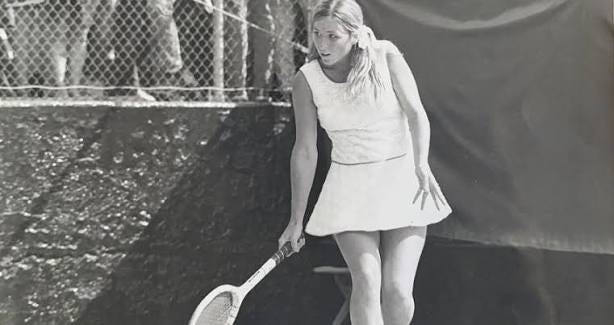
From June to this time of year, mid-September, she’d religiously watch the summer tennis majors on television: Wimbledon, which she competed in from 1969 to 1972, to the U.S. Open, which she also played at Forest Hills.
Last week, I was staring at a sink full of dishes, midday, at home in Missoula.
In the reflection of the task ahead, I remembered that this was a routine I’d set aside for myself every day: I’d consciously let dishes accumulate throughout the morning so that, come midday, I’d call my mother.
Every day.
Every day since the pandemic struck, my brother and I would check in with her. She’d lived alone for decades by that point, and, with asthma, chronic body pain, and poor nutrition, she was a COVID casualty poster child. I didn’t live near Palo Alto, California, where she rented, but would call while doing these piles of dishes during lunch break from work.
Every day. For six years.
All the way up until she suffered from a catastrophic fall that left her on the ground for hours before anyone found her. She’d be rushed to the ER and never come home again.
Thankfully I was able to be with her in those final days and we were able to share sweet moments and exchanges that I still think about daily.
So I’m standing here, staring at a sink full of dishes. I have this muscle memory impulse to call her, as I did for years.
But it’s also early September. U.S. Open time. I’d just watched some highlights from the Ben Shelton v. Carlos Alcaraz match and was stunned by the level of play, and of Shelton’s stunning victory.
Without hesitation, I picked up my phone and texted her:
“Ben Shelton!”
Now Ben Shelton is a twenty-three-year-old American tennis star who just beat Alcaraz in the quarterfinals, a Spanish player who’s also twenty-three and considered perhaps the best tennis player alive. Shelton would go on to take Alcaraz in five sets, four and a half hours, ending the match at 3:33 a.m., the latest match in U.S. Open history.
(3:33 a.m was nearly the same exact time that I received a call from Stanford Hospital that my mother had been admitted after her fall and it wasn’t looking good and that I should get there immediately.)
My mother, if she was still alive today, would not have stayed up that late to watch the match, but damn it she would have tried, and certainly caught it the next morning.
She never missed a match and always had things to say about each player (mainly about their outfits and attitudes; she hated Nadal’s wedgy-picking and fell in love with every Greek male player.)
But here’s my point:
This time of year is important for me because I knew we could always talk tennis, a sport I’d given up a long time ago.
I’d call her and could hear the matches being played on the TV in the background, ambient sounds of tennis balls bouncing off grass or hardcourt, exploding off racquet strings.
Tennis in motion had been the white noise of our relationship. I could match the sound of tennis balls contacting any surface on the phone – grass, hard court, clay – and tell you exactly what month it was, thanks to her.
It brought her joy to watch these matches—how the game had evolved, how fast the ball now travels, how ridiculous the winning points are, the outfits, the player payouts, the marketing schemes, the exclusivity. Bittersweet, too.
She’d stay up late watching tennis then pivot to bad crime shows, being amused by the charade of it all. She was incredibly wise. She tracked this life, this world, these games and shows and terror and loneliness.
At a certain level, she knew that all of it was some divine play.
I can hear her husky laugh now. It makes me wince. I imagine her on that worn, coffee-stained edge of her couch, eyes blazing, tracking with aliveness a particularly potent point between Shelton and Alcaraz, then leaning back when Shelton ends up winning it.
“Oh my gawd,” she’d say with a half-smile. “So good.”
And for this reason, it felt right to text her.
The hospital lost her phone and everything in it—all her texts, her photos, her secrets—which a part of me loves. But on my phone, as I texted my mother’s ghost about the latest tennis reel, I caught the previous text exchange, the final words she’d ever written to me.
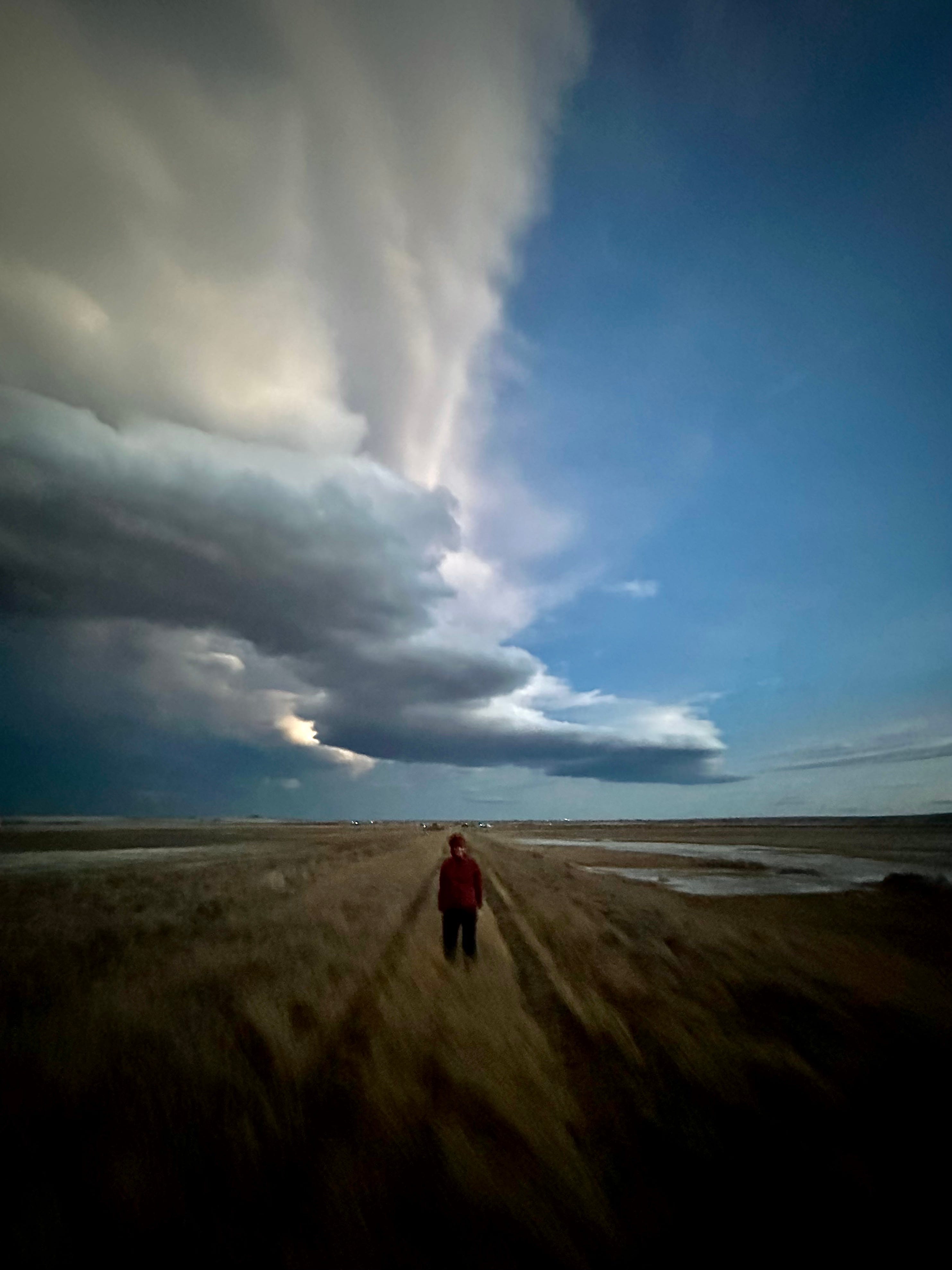
It was in response to a video I’d sent her ten days before she died, where Erin and I had driven a few hours to Freezeout Lake, Montana, to camp and catch the famous snow geese and trumpeter swan liftoffs at sunrise that happens in March, in the tens of thousands.
The sounds and magnitude is something else, like a roaring jet turbine. We’d caught a few launches at just the right time. I sent her a video of the birds, then a photo of Erin beneath some truly breathtaking clouds amid 50 mph wind gusts.
Then, two things happened:
First, she thumbs-downed the image, which made me buckle over laughing and crying as I knew that it was a mistake, that her shaky fingers hadn’t realized what she’d done (she was the biggest lover and supporter of all my work, photos, life.)
The second thing was her text, the last words she’d ever text before dying, that stopped me in my tracks and made me miss her more than ever:
“Looks like a space ship!”
Liftoff, Ma. Liftoff.
She returns in mysterious ways more and more every day. Her love, the ones we love, are always somewhere. ❤️ May the dishes sit as long as they need to.
If everything else was to impossible to talk about, my dad and I could always talk about soccer and I would always learn something about him between the lines (or at least I imagined I did). He’s been dead for 6 years now but I had many a conversation with him about the state of soccer, FIFA (and perhaps the state of the world and him in it between the lines) during this summer’s World Cup. Thank you for writing about tennis and other things.