
Surreal Migrations
12 things I found in December

Every last Wednesday of the month, I’ve been sharing a dozen of the best things I found out there. Writing. Music. Podcasts. Films. Gear. Recipes. The intent is to maintain a punchy counter against the algorithms and to amplify the beautiful work of others. Here’s a link to previous lists so far.
A final head’s up: I have no paywall for this newsletter and intend to never incorporate one, but I will be thanking all of my paid subscribers with a mailed gift of appreciation, in January 2026.
For those who support this work financially, holy hell: thank you. For those who wish to bump up their support from free to paid by tomorrow—you’ll be included in that gratitude gift.
I’ve got some exciting plans to deepen my writing on this platform in 2026, so more details to come. Just know that your support is felt, appreciated, and will be reciprocated. Happy new year!
12 Things I Found This Month
VOUDOU. Somehow during the course of this holiday block, Erin and I found ourselves considering West African mysticism. Divine Horsemen: The Living Gods of Haiti (1953) is a short black-and-white film, 52 minutes, that drops you right into the entrancing heart of Haitian voudou (or “voodoo”), originally shot by avant garde Ukrainian-born filmmaker Maya Deren. Twenty years after she died her husband compiled her work in Haiti together. It’s a raw ecstatic look into Spirit and possession through the body. Something about it left me transfixed, unsettled, moved. Deren is most famous for her short film, Meshes of the Afternoon (1943), considered “one of the most influential experimental films in American cinema history.”
FELA. I’m sure many will join me in this statement: Radiolab was one of my first loves in the podcast-o-sphere. I remember listening to hosts Jad Abumrad and Robert Krulwich weave science communication with humor and storytelling. (Fact: In 2009, I won my first 50-mile foot race the same day Radiolab did a live show “In the Dark” in Portland, for which I had tickets, for which I drove directly from the race to the fancy-ass Schnitzer Hall, all muddy and salt-encrusted, only to have my mind blown open. I wept.) Radiolab’s current hosts, friend Lulu Miller (everyone, read Why Fish Don’t Exist) and Latif Nasser continue to hold up Radiolab’s high standards. (Don’t know where to start? “Corpse Demons,” obviously.)
All that to say, when I saw folks beginning to share Abumrad’s new 12-part series on Afrobeat god Felt Kuti, I bookmarked it then moved on. Finally I dropped in and . . . holy shit. Such good reporting, production, and meaning weaving. Fela’s been in my orbit for over two decades, and I’ve always known that something about his music penetrates differently – the political meets the rhetorical use of repetition to entrance, to transmit, to galvanize. Highest recommendation. Read this solid New Yorker article for context.SALMON. Speaking of Lulu Miller, she recently shared this most exquisite 14-minute film on social media, “Wild Summon,” that radically anthropomorphizes the life and migration of wild salmon, but somehow totally sticks the delivery. The film haunts me still, as it reminds us of the more-than-human flows of trophic endurance, shared memory, and longing for home swirling everywhere inside us and within the living world.
SURREALISM. You know those friends who love jam band music and nudge Phish upon you with increasing intensity? I’m sort of like that with Naomi Klein. No one’s a bigger fan of Klein than I am. No Logo. Shock Doctrine. This Changes Everything. And most recently, Doppelganger. All hits. So smart, sobering, pattern recognizing, systems appraisals. In her latest feature in Equator, Klein explores Surrealist art and its relationship and response to rising fascism over the years, and the role of art and beauty during uncanny times.
A quote:“Surrealism…was profoundly romantic. For every severed limb, there was a torso replaced with a tree trunk or seashell. For every monster, a fertile mother, or a beguiling human figure with feathers or tangled leaves for hair…If the early Surrealists were determined to look evil in the eye, they also doggedly searched for its antidotes – for love, meaning and freedom. Their quest took them both inward, to the depths of their own psyches, into the realm of dreams, hallucinations and childhood innocence; and outward, to the mystery of forests, of oceans, of constellations. They were devoted to enchantment, to rapture and marvel, to the ‘convulsive’ beauty that Breton wrote of in Nadja. Most consistently, they turned towards one another, throwing themselves with abandon into the bonds of friendship – notwithstanding their legendary artistic fractures, ideological splinters, sexual betrayals and noisy excommunications.”
SOUP. I’ve made this very simple, very bueno vegetarian tomato soup at least four times in the last month, and I’m unafraid to continue this cadence into the new year. Its creamy texture comes not from dairy but from cannellini beans, and the subtle acidity tang sharpens the senses and warms the belly. Consider piled triangles of cheese and bread as kin for this one. (Cookie & Kate’s lentil soup and banana bread are also in high rotation.)
DOUGHNUT. I’ve been part-time managing editor for this refreshingly hopeful relaunched bioregional storytelling platform set in “Salmon Nation,” Magic Canoe, and recently published a hybrid article/interview about the international bestselling book Doughnut Economics. The piece is all about how, several years after the book’s publication, its diagnostic model pairing social demands with ecological limits has continued to be of use for those imagining alternative economic systems, a regenerative economic tool championed by Occupy Wall Street to the Pope to the United Nations.
RIO. This 2024 Brazilian film, I’m Still Here, (2-minute trailer) is set mainly in Rio de Janeiro, in 1971, during the country’s military dictatorship. It’s a long, emotional ride that suffuses family tenderness with the reality of how quickly things can go from comfort to catastrophic, and that the suffering of not knowing, of being left in the dark, can be its own special hell realm. The conceit: a liberal-intellectual former congressman gets taken by government thugs and is never seen again, and what happens to his wife and children in his vacancy is masterwork on the screen. It’s been a while since I’d watched Roma, but these two films somehow share similar DNA.
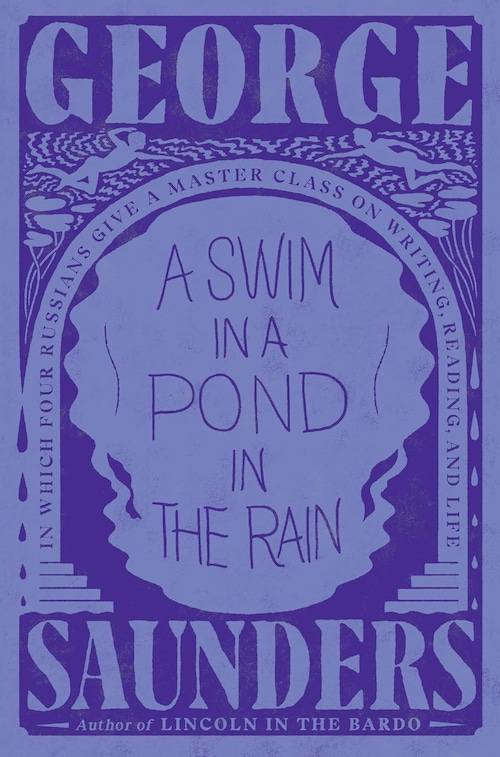
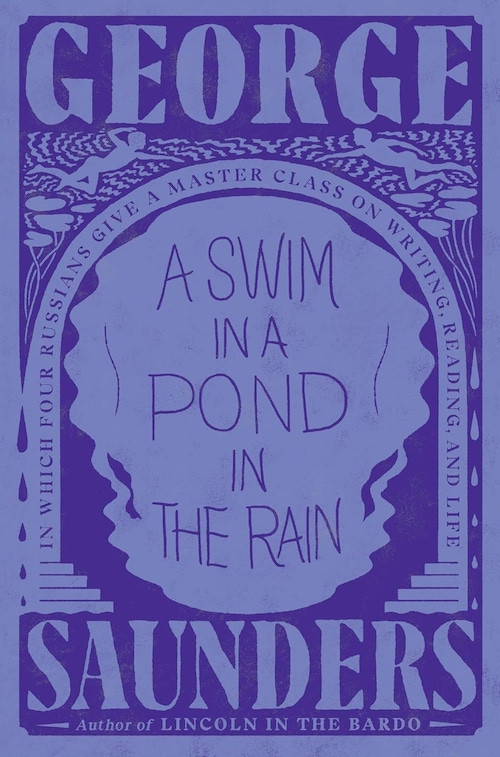
SAUNDERS. Now I’m not sure if this book necessarily fits the theme of my reading-writing project, Mandorla 200, but I’m nearly finished with George Saunders’s book A Swim in a Pond in the Rain, and it’s exceeding the hype. There’s so much packed into this masterclass of pulling apart Russian short fiction. So funny, such confidence, such wisdom. A top three writing craft book for any writer’s shelf, no matter if you’re strictly nonfiction. It’s even inspiring me to revisit some (god-awful) fiction projects of mine that have gone fallow. Other go-to “craft” books: Ensouling Language by Stephen Buhner, How to Write an Autobiography by Alexander Chee, and The Writing Life by Annie Dillard.
PALESTINE. Access to one’s unmodified homelands is critical to belonging, to cultural and community sustenance, and in the West Bank, Israeli encampments are continuing to fracture Palestinian land, making it increasingly dangerous and more difficult to walk freely in open space. Amid the crush of reporting and ongoing violence coming from Israel’s continued attempted genocide, something about this New York Times story really pierced me (gift link).
From the article:“While Palestinian hikers once walked linear routes for miles, they now — fearing attacks by settlers — often use circular routes sticking closer to their villages. … ‘We used to roam for hours,’ said Jamal Aruri, 61, a retired photographer and experienced hiker at the front of the group. ‘Now, we walk in circles.’”
WIND. Since The Way Around’s been officially out in the world for nearly six months, I’ve received a steady drip of letters and notes from readers – friends and strangers alike – who share with me how the book’s landed for them. Honestly, it’s one of the most magical parts of seeing a book through to publication. Less the affirmation and more that someone found certain gemstones of insight, or new authors they’re exploring because of a reference I’d made, or that somehow, in some small way, they now experience the world differently because of my story. I cherish every single note. Recently, I received a warm message from writer and audio producer Fil Corbitt, who is also a fellow circumambulator and put together this wonderful audio adventure about circling his home mountains outside Reno, Nevada.
BEAR. Heard, everyone’s got their own opinion of The Bear Season 4, but I just sent the whole thing in a week and loved every bit of its pacing, its writing, and its maturation. That final scene in the alley, the reveal and release of it all, the radical care strangleheld by obsession, by finally seeing through surrender what’s perhaps most important and trying to live into it. Goddamn. Season 5. Summer 2026. Catch up.
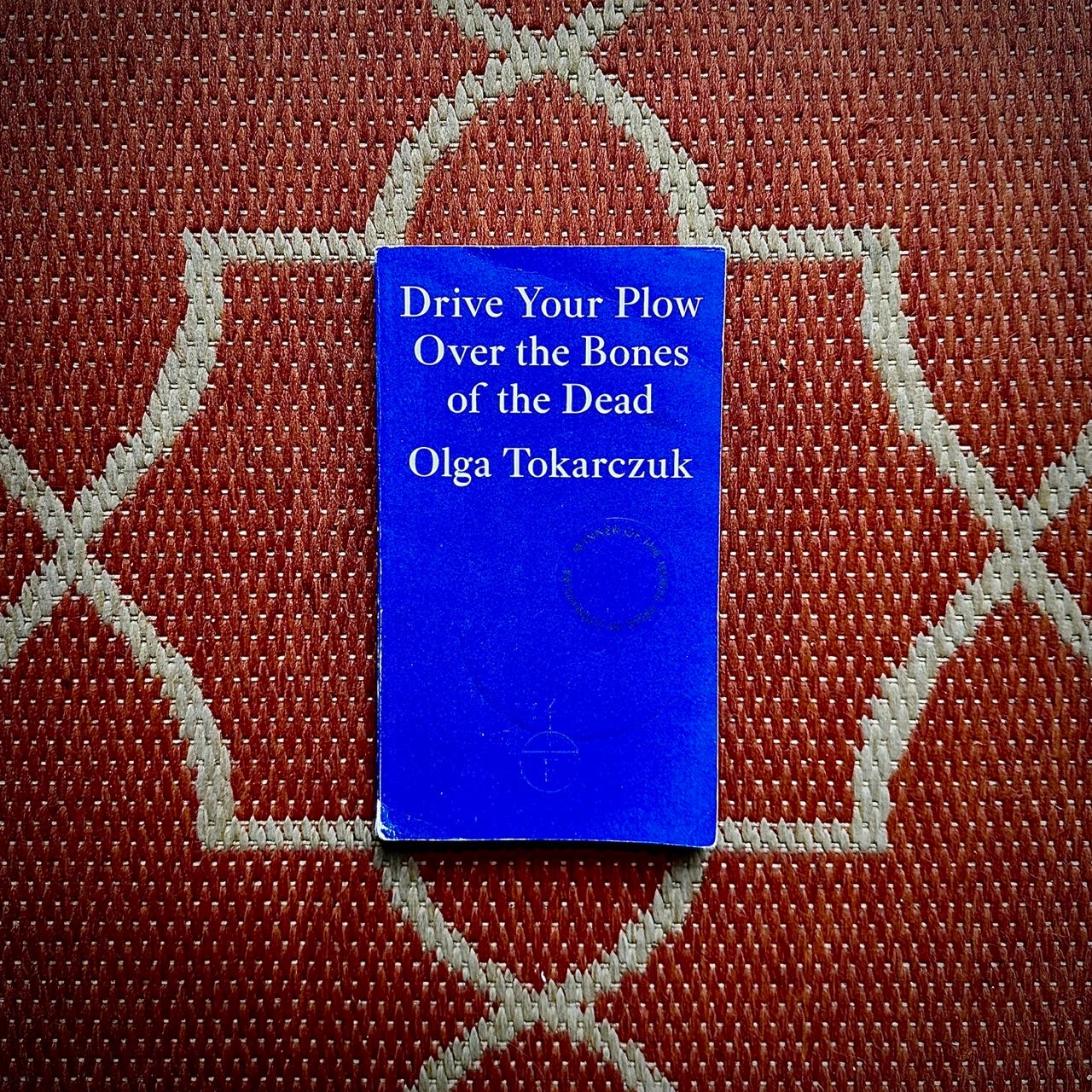
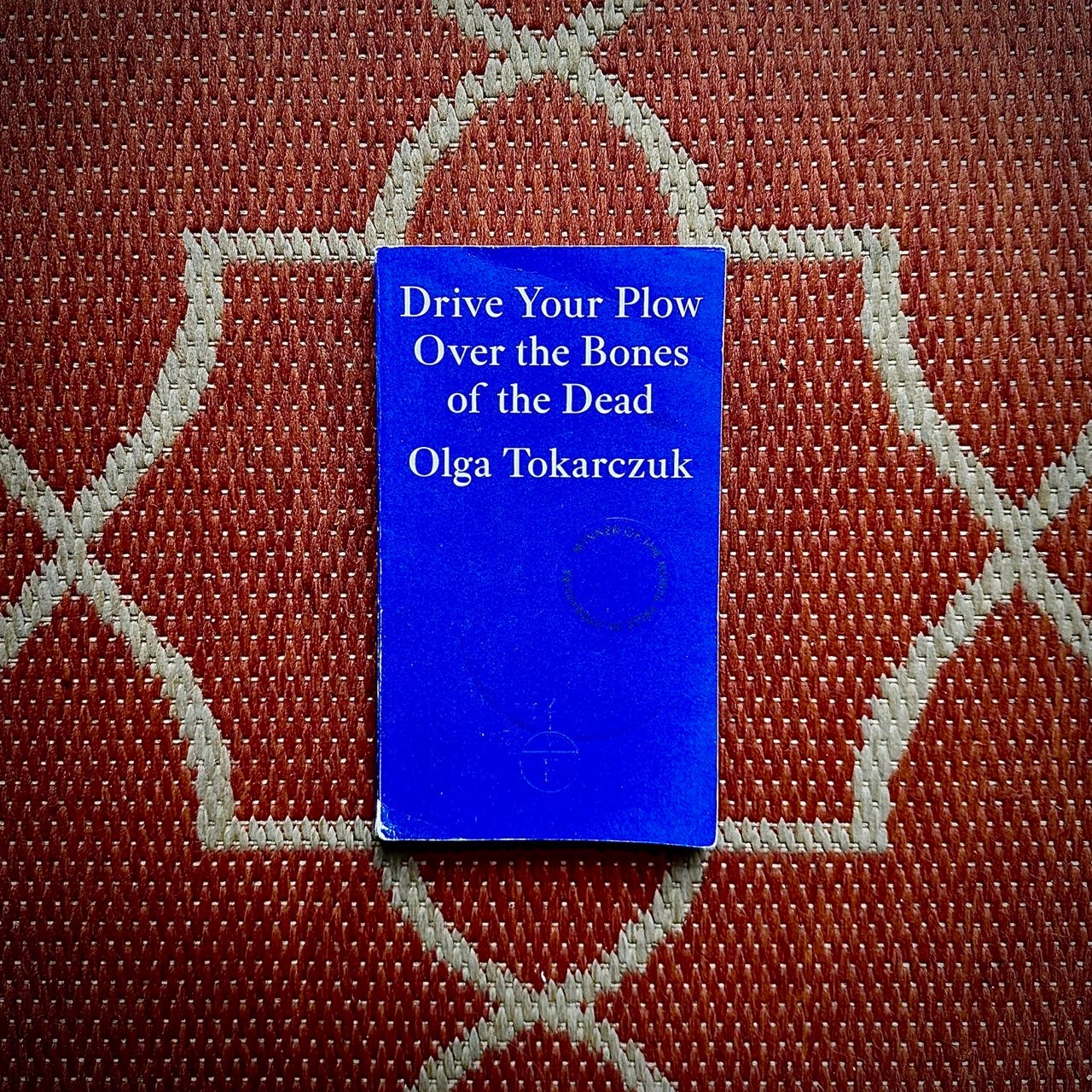
PLOW. Here’s the 130th entry and final book of 2025 on the Mandorla 200, Drive Your Plow Over the Bones of the Dead, by Olga Tokarczuk (tr. Antonia Lloyd-Jones). I just posted my top 5 (Mandorla) books of 2025, if you missed it, though every single book entry are the “best” books. My 200 words . . .
Can you smell the cage’s metallic uniformity? Or is it more subtle, welcoming even, a peculiar shape cast of Empire where our own psychic defenses have long-accepted certain social, economic, and ecological violations so as to not feel the true weight of suffering? Note the efficiency. Note how well we buttress the reality of constant slaughter at unfathomable scale, just as ancient stars and planets whirl above to suggest patterns far older than our strange prison. Such cosmic endurance will eat us all, but that’s no excuse to keep turning against liberation, keep taming wildness, keep throwing away those unfit for Machine service. No. Look into the amber rippling of a fox. Find something familiar. Let that awaken love and rage. I struggle to feel because a sophisticated filter has been installed inside, a filter that can’t let me access the full depth of sorrow. Interrogate that filter. Smell it. Lick it. That’s the cage, the thing keeping me from myself. Then choose to ally with older forms—fang and fungi and wing and gill—a politics of freedom. To know sorrow is to know a way home, and home sets me free.
Thanks again for reading The Jasmine Dialogues. So fun, so wild, to be here with you.
Here’s to a bold, true, liberated 2026. A bonus photo for those who make it to the footer. I’m still figuring out how to wear a hat correctly. . .
So many deep thoughts and hidden gems here Nick. Thank you for sharing your loves.
I always enjoy the “12 things” posts… and will revisit these as I tend to do. Thank you and all the best for 2026!