

Normally, every last Wednesday of the month I offer a maximalist list of a dozen best writing, music, recipes, gear, podcasts, and art discovered all month. (Here’s a link to previous lists so far.)
But this month threw a major screwball.
On April 1, I woke up without a mother.
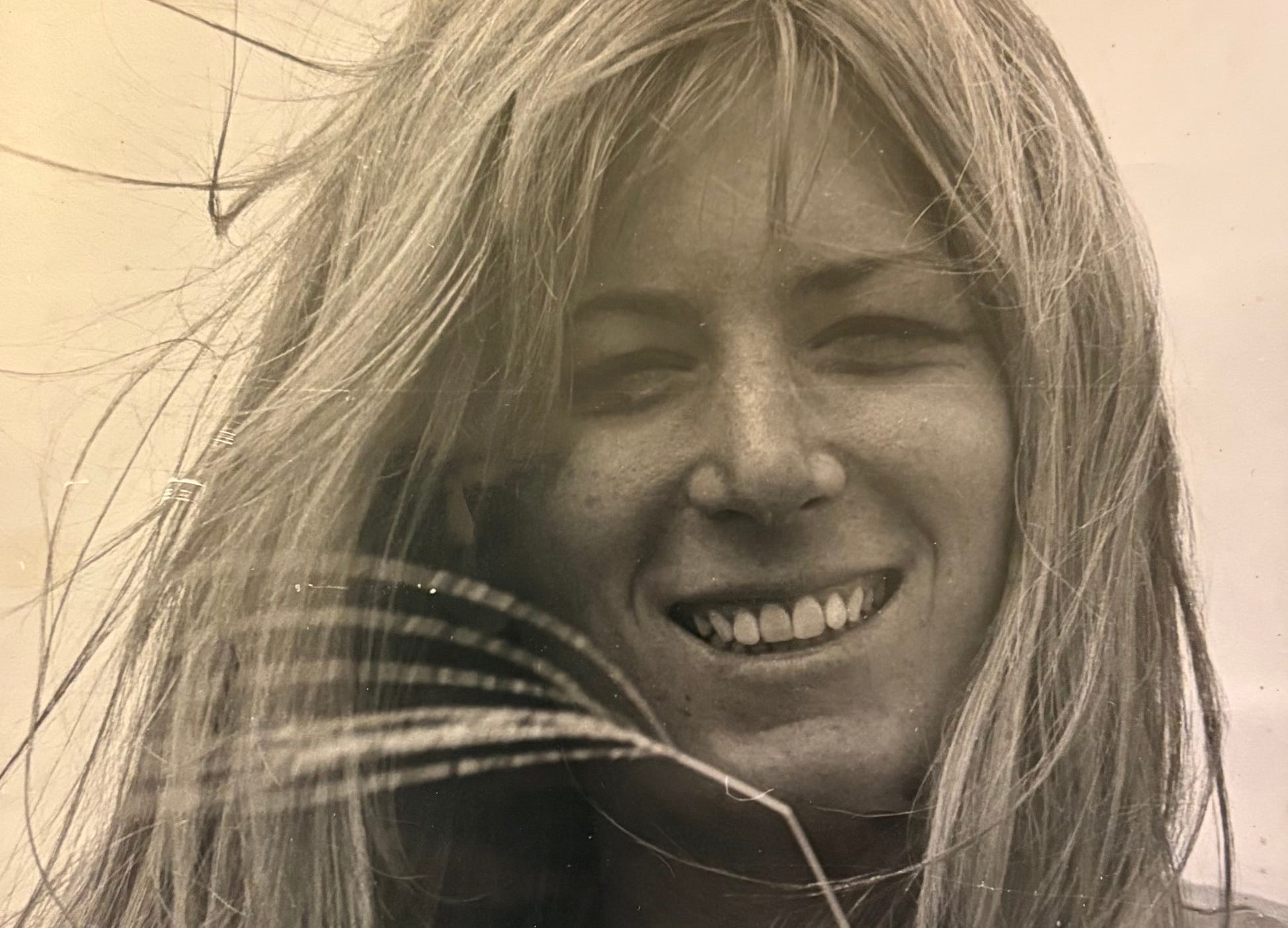
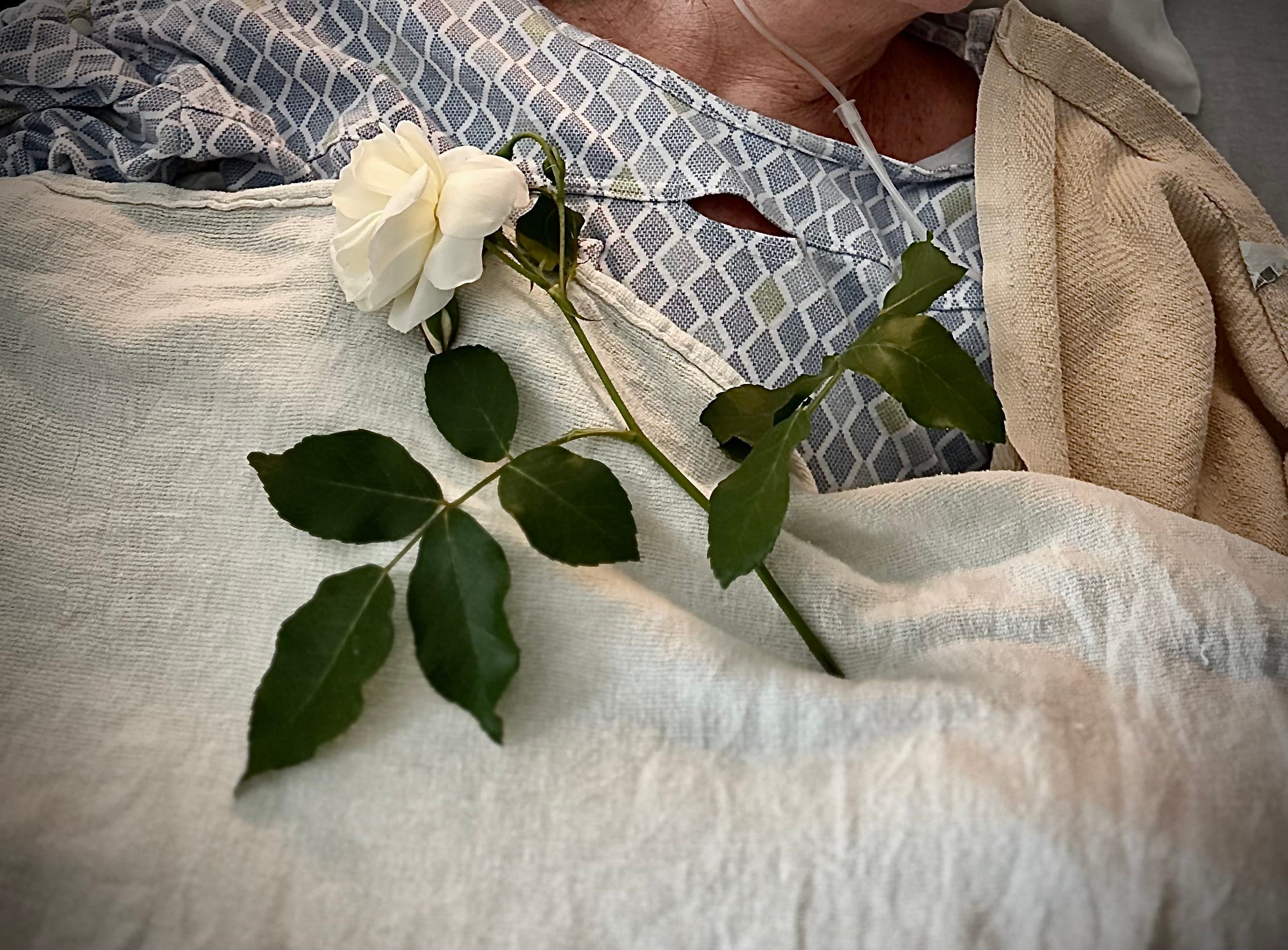
Denise Carter Triolo died on March 31, around noon, at Stanford Hospital in Palo Alto, California. I was there for all of it, several days before and after she crossed over. I was able to lock eyes, hold hands for hours, comb her hair, tell her how much I loved her.
It was, without question, the most intense week of my life.
I’m going to hold most of the details of my experience close for now, but thought that, this month, instead of offering my usual bounty of creative and cultural foraging, I’d share with you 12 things about my mother I learned, or was reminded of, during this process.
A version of this was posted on social media last week, which somehow the algorithms picked up, and I’m now receiving hundreds of comments daily from people from all over—empty-nesters, mainly women, some bots?—who are expressing their condolences and sharing their own losses.
At first, I was disgusted at Zuckerberg’s techo-monsters for exploiting my grief to optimize for eyeballs—we die, but attention capitalism lives on—but then I thought:
Why not have collective grief go viral? If something on these insidious platforms must tickle the algos, it might as well be a tribute to a rebel tennis player who used Facebook only to send me DMs of singing frogs and napping cats and dogs in sweaters.
You win, Ma.
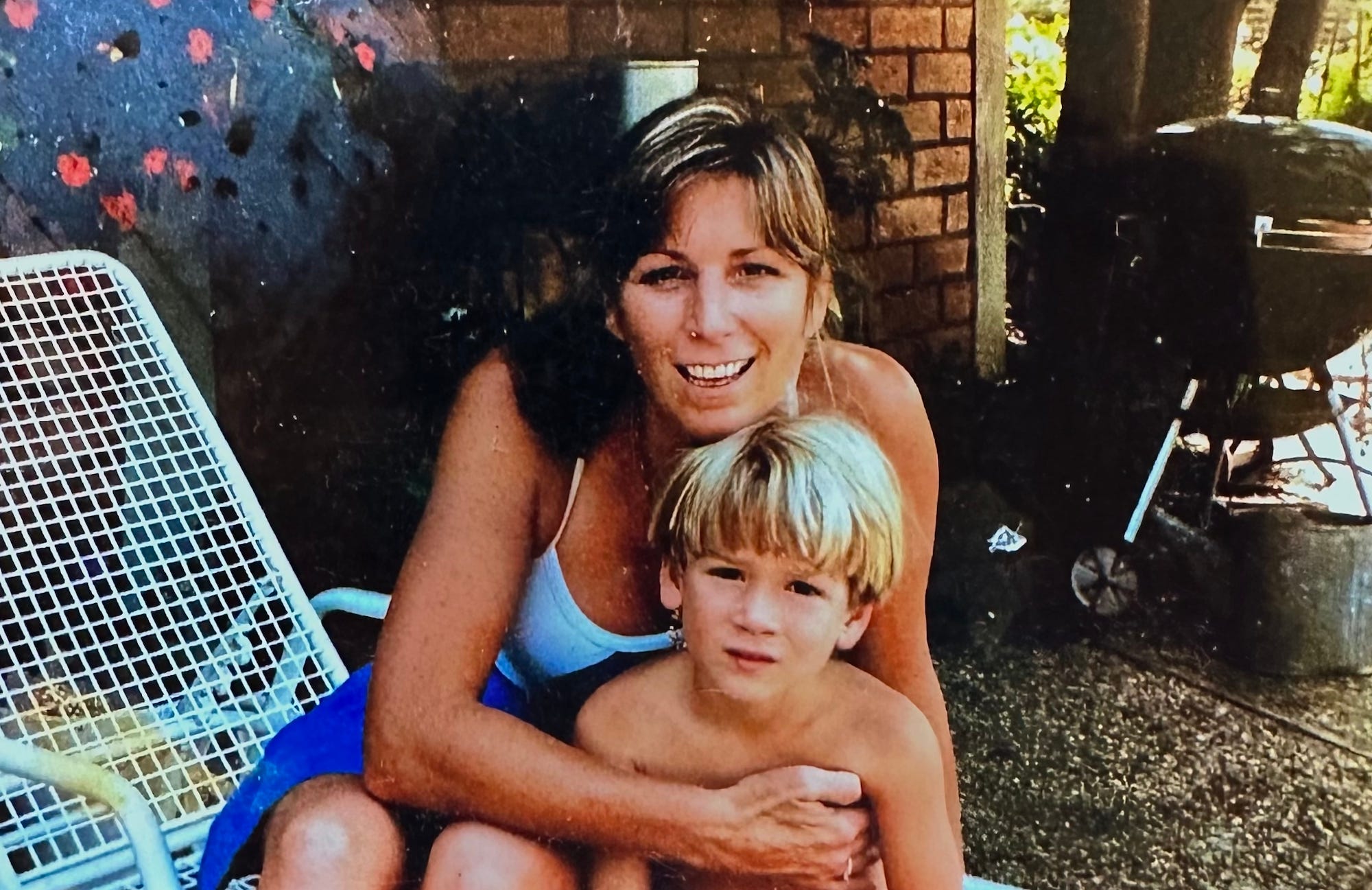
OK, here are 12 things I learned, found, or remembered about my beautiful, complicated, and soulful mother, Denise Carter Triolo (1950 – 2026), this month. (Here’s the official obituary.)
Thanks for being here. And for all your notes and calls and flowers and food and texts. It’s been absolutely overwhelming and heartwarming, in every sense.
12 Things I Found (About Mom) in April
KIDNAPPED. Denise Triolo was once kidnapped as an infant, stolen from her carriage set on the side of a public tennis court in San Francisco’s Golden Gate Park, while her parents, my grandparents, were too busy playing a match. The city’s entire police force allegedly scoured the area and found her, hours later, unharmed, alive, and left in a bathroom stall.
WIMBLEDON. Mom was a mischief, a rebel, an unapologetic feeler, a world-class tennis star who made it to Wimbledon and the U.S. Open and who fought for equal representation for women alongside Billie Jean King and who once beat Chris Evert in a match. (Last week, the Women’s Tennis Association put this amazing tribute out on their channels.)
DRESS. While cleaning her home the day after her death, I found a white dress hanging in a closet full of junk. The dress was custom-made for her during her Wimbledon years by Ted Tinling, the “foremost designer of tennis dresses of the 20th century,” a flamboyant fashion czar from Britain who once said that my mother was one of his all-time favorite models. I’ve been stewing on a creative project on the significance of white garments across time and culture, in myth, literature, and fashion, white clothing as an act of violence, submission, Manifest Destiny and American Progress and Emily Dickinson’s white dress era and Native boarding school assimilation and matrimony and “purity.” It’s all a wild tangle, but seeing Mom’s most prized tennis dress was a nod that I’m onto something. More soon. (Add any references or ideas that come up in the comments, will you?)
GUT. God, she loved her shrimp louie salads and Filet-o-Fish sandwiches from McDonald’s. She made a legendary spaghetti sauce that’s left stains on an off-brand Le Creuset, and she loved to eat breakfast for dinner. Omelets. Tots. Frogs in a pond. Preferred 1% milk in her coffee. Her chicken divan recipe is something none of us have been able to replicate.
SOUNDTRACK. She had a thing for Hozier, Trevor Hall, Hootie and the Blowfish, the Reality Bites soundtrack. I have distinct memories of her listening to Alanis Morrisette’s Jagged Little Pill in her Isuzu Trooper paired with smells of cigarette smoke and a bag of fish sandwiches from McDonald’s wedged in the center console.
HEALER. My mother once saved a man’s life who had a purple grape stuck in his throat. Heimlich. She forced my brother and me to watch the movie Gandhi (over three hours) when we were very young and cared bone-deep for hippos and zebras, inoculated with a love for wildness after an impressionable trip to South Africa, on tour playing tennis and offered a two-week private guided trip to Kruger National Park, to study predator-prey relations. (One of my favorite scenes in my book, The Way Around, was her stories from that trip, which included watching a zebra get killed accidentally and a colt running endlessly in circles around her mother. Haunts me still.)
NICKY. Mom, along with her older sister, are the only two humans in the world that can call me this.
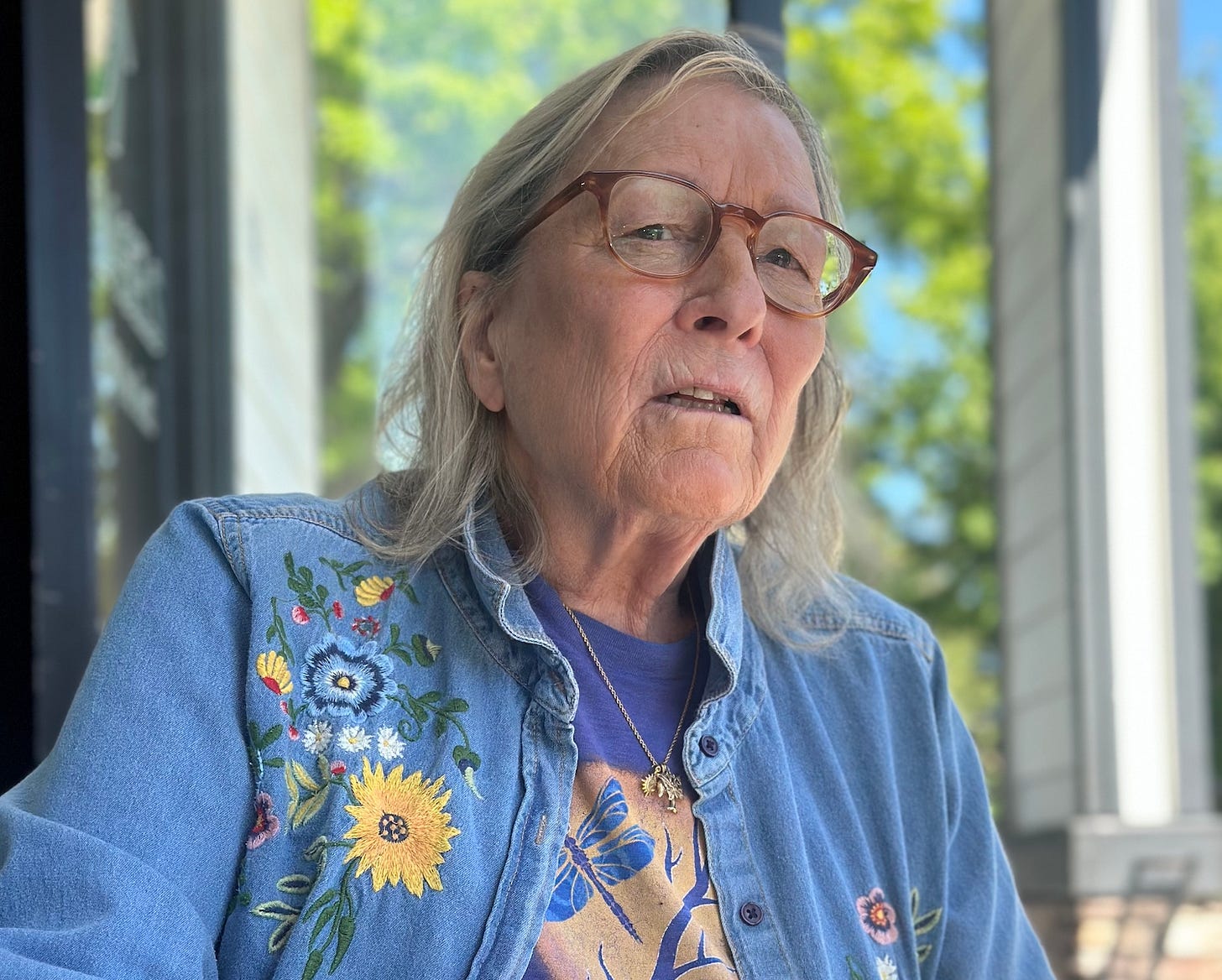
ECLECTIC. Denise Triolo was one of the people I knew who subscribed to both The New Yorker and People and read them both front-to-back. I’d call her on Monday and she’d be reading Infinite Jest, and, by Thursday, she’d pivot to some romantic airport trash novel. Her favorite book: The Magus, by John Fowles. (It’s a doorstop, but I read the whole thing in a fever dream during my first round with COVID. So good. So disturbing.)
WILD. She adored remote cabins and sun-filled meadows and was known to eat all the gorp on day one of backpacking trips. I see her now, in our family’s cherry-red Subaru, head out the window, surrounded by pine and granite and in love with the place, the smell, and perhaps, for once, herself.
PREPARED. When cleaning out her home the day before she died, I found a very large knife under her mattress, blade open, on the side where she slept. I remember she’d told me about it, but it startled me at first. Though my mother was loyal to a life of non-violence, she was also a sucker for shitty crime shows and serial killer narratives, which didn’t help her with feelings of safety and occasional paranoia.
COVID. When the pandemic struck, I started to call my mother every day. COPD and asthma made her a poster child for a pandemic casualty. “Hi Nicky,” was her greeting every time. (Again, nobody else.) She survived. I made it a ritual and kept calling every day for six years, until last week, when I watched the pulse on her neck fade to nothing.
PRESENCE. To say I’m devastated that she’s gone is too small. Turns out grief is a feral thing, comes and tackles you and pins you to the ground when you least expect it. I am, however, convinced that my mother’s mischief has already found new forms, in hues of unencumbered things—full moon, buttercup, earthquake, wolf teeth. Who knows. “Not knowing is most intimate.” I’ll keep looking for her in these liberated places, keep attending because the only thing I can say after moving through the hardest week of my life is this:
Presence is everything. Presence is prayer. Presence is the whole game.
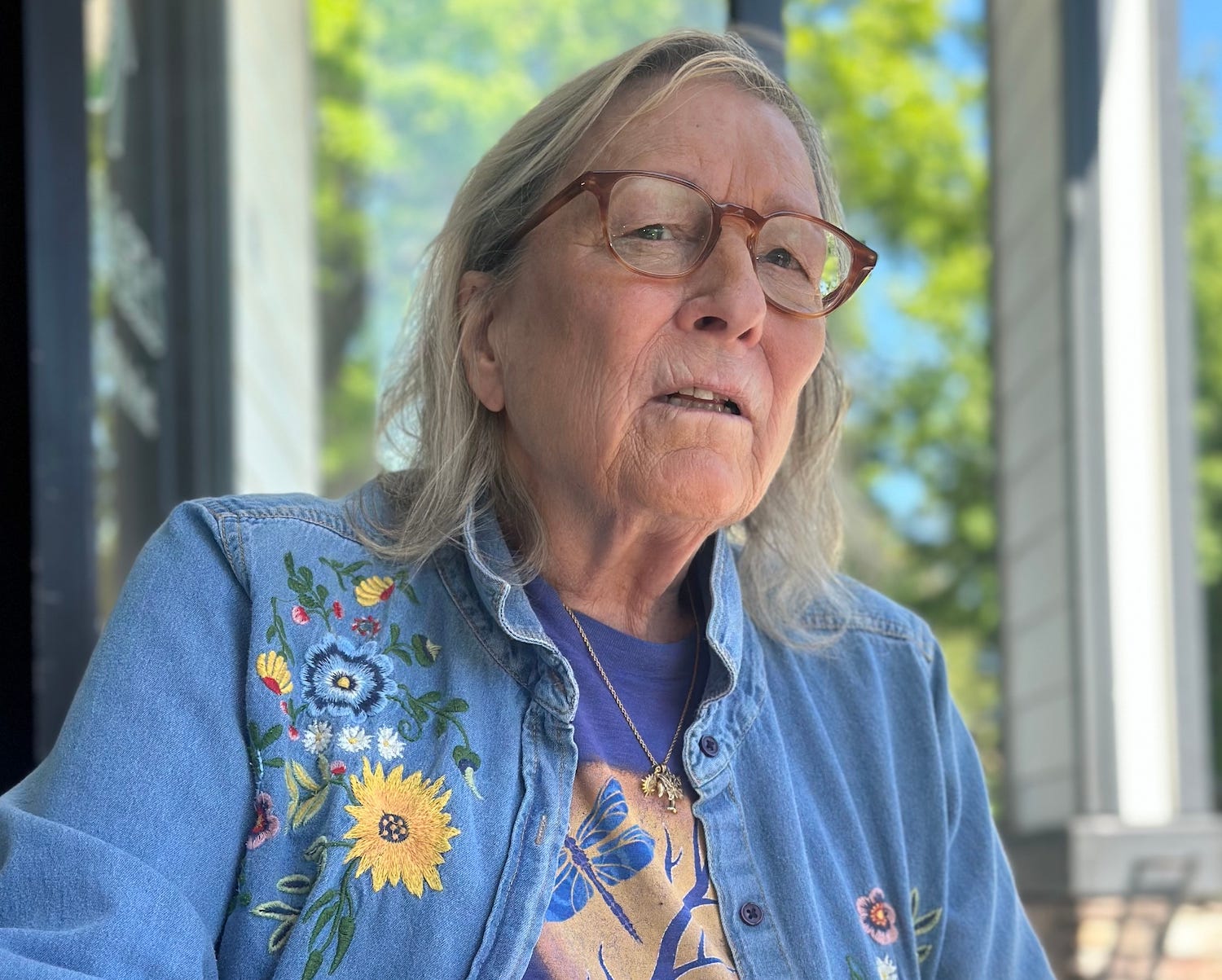
(Note about the title: This was inspired by friend, writer, and Fact & Fiction bookseller Christopher Densmore, after sharing a stage with him at a recent reading and listening to his essay about his mother, who’d passed, and her affinity for hummingbirds, forthcoming in Camas.)
What a lovely tribute.
For your white garments project:
Whitewashing America: Material Culture and Race in the Antebellum Imagination by Bridget T. Heneghan
My dad, who passed in 2002, had an Isuzu Trooper too--thank you for calling forth those memories. We sold it for $999 to a farmer who grew Christmas trees and I'm still tempted to look for it out in the fields when I drive by, though I'm sure it's long gone now.
Loved reading the longer tribute here. Holding you close.