
A Necessary Estrangement
12 things I found in May.

Every last Wednesday of the month, I’ve been sharing a dozen of the best things I found out there. Writing. Music. Podcasts. Films. Gear. Recipes. The intent is to maintain a punchy counter against the algorithms and to amplify the beautiful work of others. Here’s a link to previous lists so far.
12 Things I Found This Month
SIRĀT. This 2025 indie film is set in Morocco, where a father and his son are traveling by minivan looking for their daughter/sister, who has gone missing amid the desert rave/party scene. What ensues is a descent into the depths of mystery and surrender. The movie’s been circulating because of its starkness, but also because of its score, which, when paired with the ever-ominous landscapes, delivers.
ANTHROPOCENE. One of my dear friends and exceptional essayist Daegan Miller just wrote another zinger for LitHub about the work of “the world’s most pessimistic climate writer,” Roy Scranton. Here’s a line:
“Learning to die in the Anthropocene never meant giving up or giving in; it always meant something much more rigorous, much more difficult: learning how to let this brutal world, this realm and the culture it sustains, go.”
Anything Miller writes is worth your time, your eyeballs, your consideration. Fact: He gave me one of the most formative early edits of The Way Around. (He’s also a sub-3 marathoner. We once set up a mile race, just the two of us, and he destroyed me.)TRAVERSAL. Maria Popova has always been an intellectual-writerly hero of mine, reading her from the Brain Pickings days to, now, The Marginalian, and the recent release of her book, Traversal, which I’m only starting to get through. There have been a few interviews published with her, but I found this one on the podcast, How I Write, to be insightful and sharp, even subversive.
ZADIE. This month, Zadie Smith gave a lecture at the Academy of Arts and Letters (might need a subscription), and a version of that speech, “Art for Our Sakes,” was printed in this month’s New York Review of Books. I love their print version, even though they’re oversized and have a funny waxy feel that’s hard to roll and fold.
“That convenience should be the highest aspiration of human existence happens to be one of the many uninterrogated assumptions of capitalist ideology,” Smith says. “When we convince ourselves that art, too, must take the shortest route to its effects, then we’ve submitted to that ideology.”LENTILS. Picking from several jars of lentils, a bunch of mint and spring greens, along with greek yogurt and tahini, this dish started out as a side and quickly became a main. High recommendation for a protein-rich vegetarian meal that’s easy and gorgeous and refreshing. If anyone has a go-to lentil recipe, drop in the comments. Always on the hunt.
IRAN. With all that’s going on in Iran right now—along with just about every corner of the planet—it seems a fitting time to queue up The Seed of the Sacred Fig (NYT gift article), by Mohammad Rasoulof. A psychological drama set in Tehran, the film follows a family whose father becomes a judge/executioner in Iran’s theocratic Revolutionary Court, and, as protests and government backlash percolate, so does paranoia and mistrust at every level. One of the best films I’ve watched this year, no question. Just hold on.
AWARD. The Way Around has been shortlisted for the Reading the West Book Award! This book has traveled far and wide, and I’m proud of it, and winning this award would help it reach even more readers. It’s sponsored by the Mountains and Plains Independent Booksellers Association, which is another way of saying it’s administered by a bunch of badass independent book-loving folk committed to literacy and the imagination in the West. After 226 nominated books, The Way Around is one of five in the memoir/biography category, beside a few authors I’ve admired for years, friend Mark Sundeen (I recommend The Unsettlers to everyone), Philip Connors (Fire Season is delicious). Vote by May 31 (that’s in four days, so maybe now? Takes 10 seconds.) Also, The Way Around was chosen as Humanities Montana’s “Great Books from Great Places” in partnership with the Library of Congress, and One Book Montana. I’ll be traveling the state this fall to libraries meeting with book clubs and communities, and the book will be represented in D.C. later this year at the Library of Congress’ National Book Festival. Last thing: Milkweed has reimagined the book cover for an October paperback release, with some additional tour dates being conjured up. More soon.
BLM. Speaking of book tours, last year I spoke in our 20 events, and one of my most meaningful evenings was partnering up with the great Josh Jackson (newsletter here), author of The Enduring Wild, photographer, artist, and fervent public lands advocate. That evening downtown San Francisco at Green Apple, with my late mother in the front row, was one I’ll never forget, and our friendship has only blossomed from there. Jackson recently had a stunning piece published in the Guardian/RE:PUBLIC (RE:PUBLIC being a wonderful new-ish platform launched by former editor in chief of Outside, when I was there, Chris Keyes) about the intersection of the current housing crisis and how public lands are absorbing that pinch, how communities are finding refuge and community in these places, and the complexities thereof. Check out this podcast interview with Josh and another dear friend, Carina Lyall, on Becoming Nature.
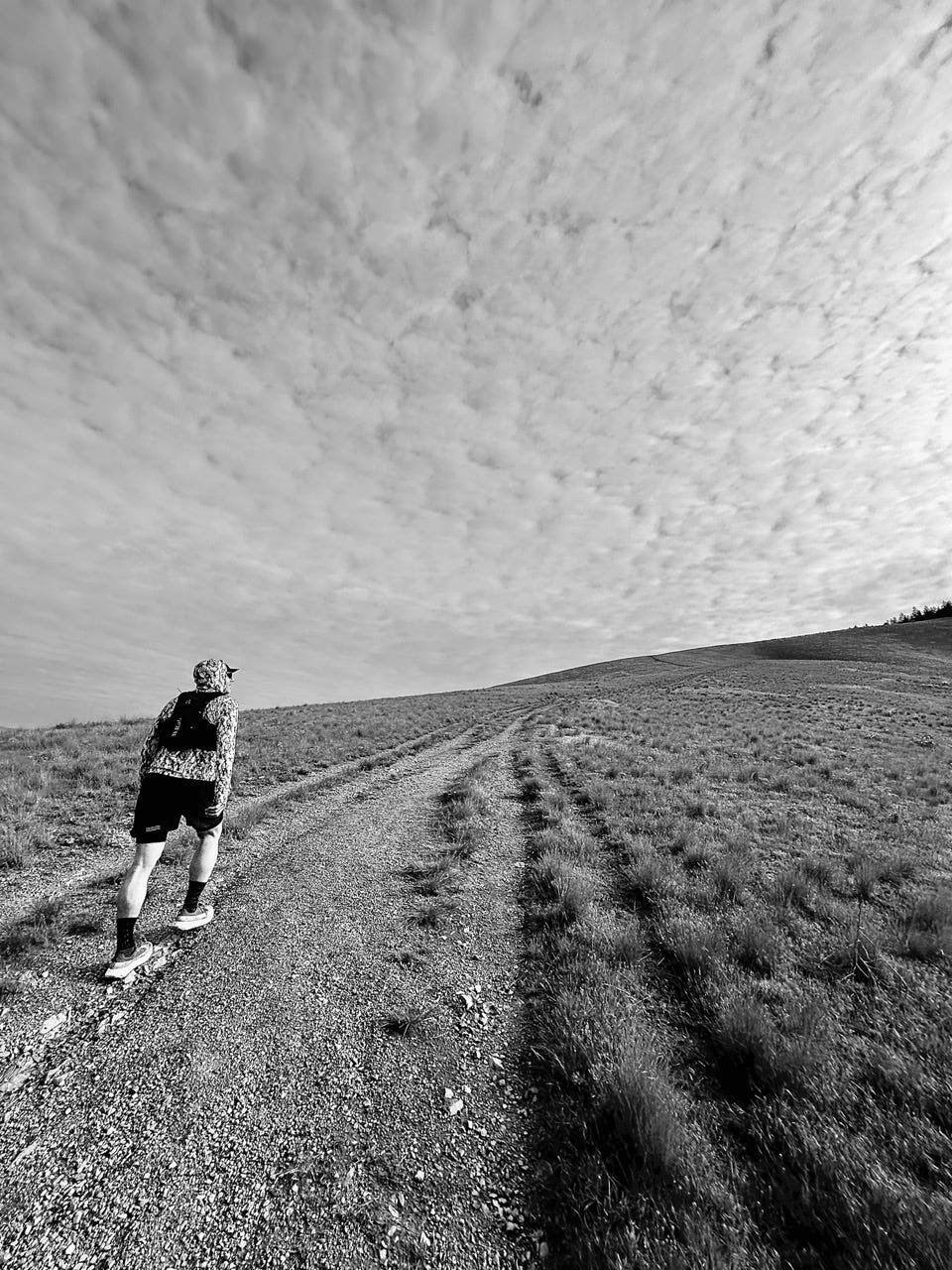
walking mountains, mountains walking, with semi-rad. COOGLER. My monthly roundups are never fully complete without a Talk Easy plug, but between my mother passing and a two-week trip to Sicily, there’s just been a lot of movement and emotional intensity. On a recent walk, however, I did adore this convo between Sam Fragoso and Ryan Coogler, director of multi-award-winning Sinners. (He also directed Black Panther, Creed, and others.) Loved everything about his style, his humility, his dedication to the work and the people. I’ll also plug, while I’m here, Fragoso’s more recent conversation with Michelle Obama, who I find walks and talks with striking integrity, wow.
POETA. Films about writers and the writing life always snag me, and I devoured this film Un Poeta (2025), a Cannes Grand Jury Selection about the descending, depressing swirl of a Colombian poet trying to relive his past accolades while being t-boned at every juncture. It’s a dark comedy, diving into the case for art for art’s sake (see Zadie Smith’s essay above), devotion, identity attachment, and more. So good. So raw. So uncomfy.
JANJI. Dear friend Brendan Leonard (SEMIRAD) and I ran 33+ miles last week as part of a larger project he’s working on, which I won’t divulge yet here, but I can say it did include questionable nutritional choices, a large mountain circumnavigation in the Missoula Valley, cheek-cramping laughter, and one of the single-most gorgeous days on foot in my home turf. I ran exclusively in Janji gear and came home chafe-free, unstinky, and (sort of) looking like it never happened. TTech Cap, the Run All Day Tee, and the AFO Middle Shorts are gear that keeps delivering the goods.
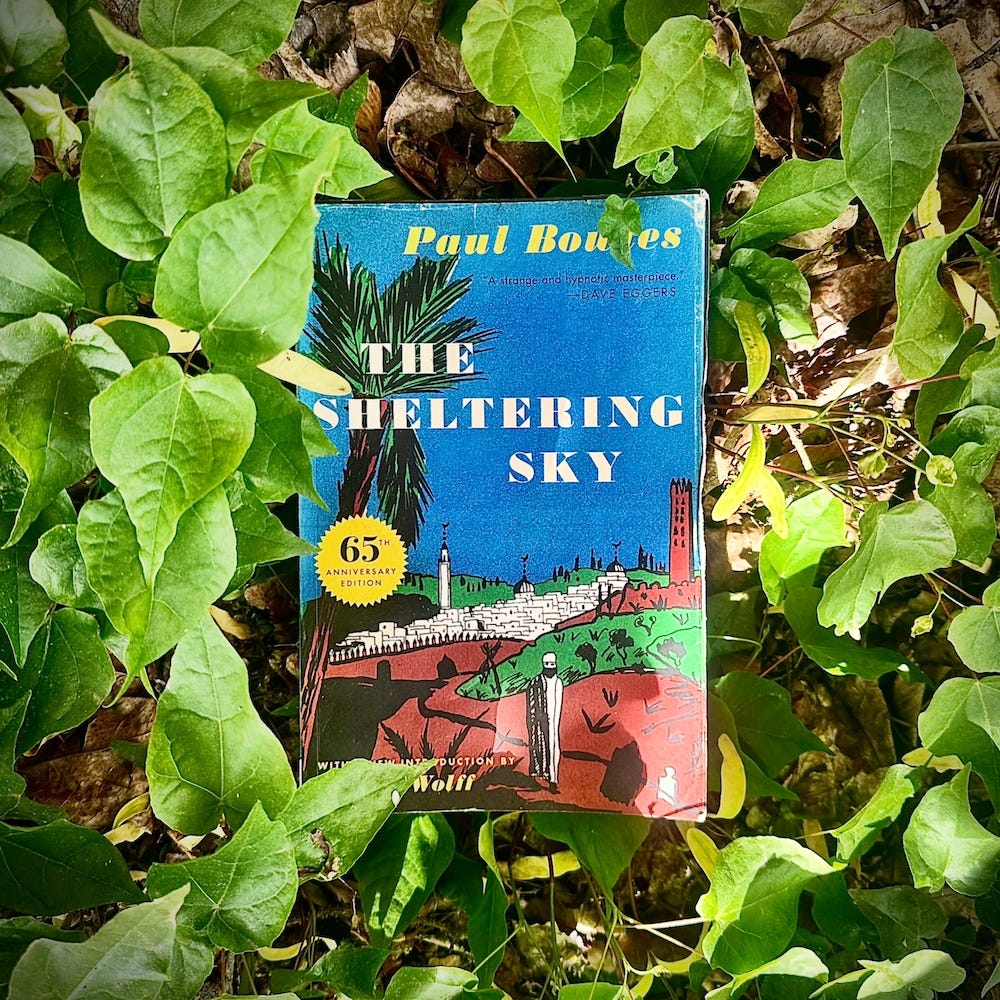
BOWLES. My 141st book (70% complete!) on the Mandorla 200 was a novel that had been sitting on my shelf for far too long. The Sheltering Sky, by Paul Bowles (1949), is sort of like a pre-Beat fever dream version of The Sun Also Rises, but set in North Africa. I read it while traveling through Sicily and found it to be a perfect and haunting pairing while being abroad as an American, estranged from his own country and ancestry.
OK, I’ll wrap with my 200-word micro-distillation:
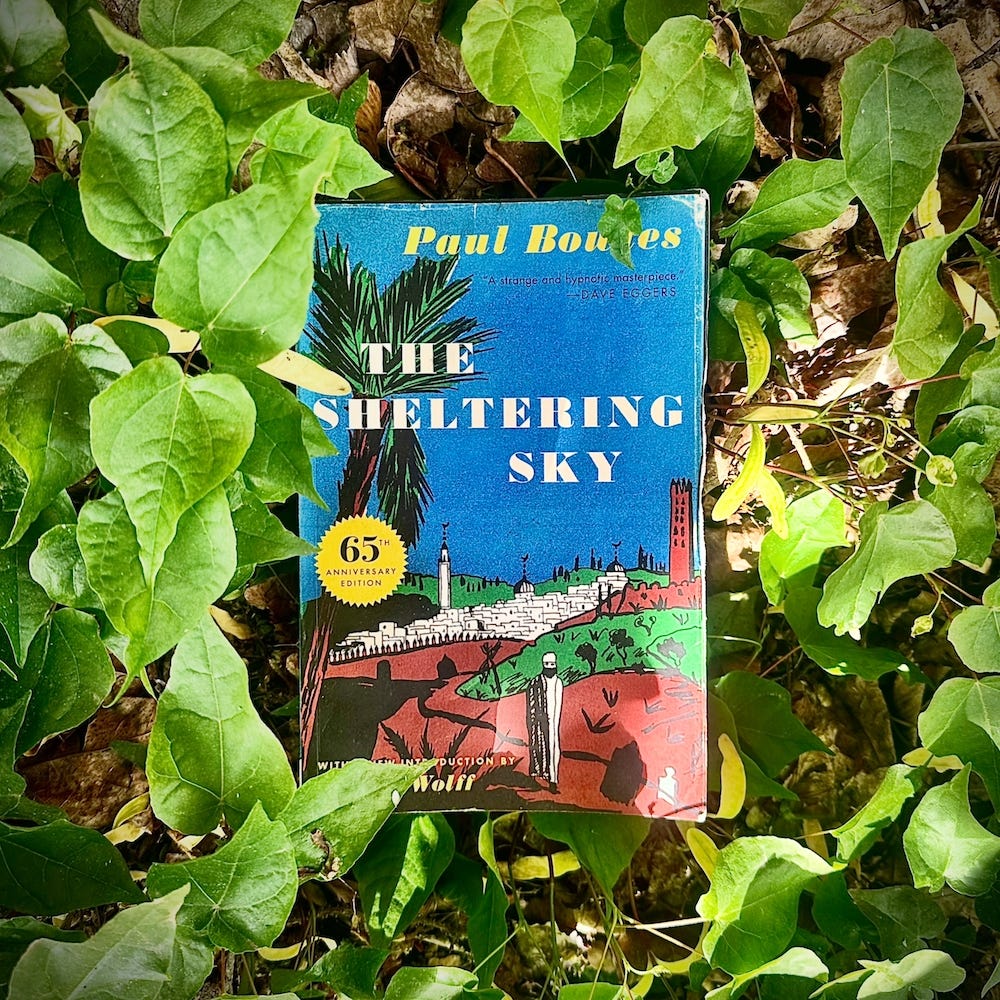
The desert doesn’t owe us epiphany. Travelers drifting in from overcivilized and overpadded parts of the world seek bone-bleached truth to swab their psychic decks and scream confessions into the dune. In the end—it’s just a desert, beautiful and cruel and impersonal and held by old cultures burnished by austerity to survive. Eclipse the elemental thud here and she will eat us alive. To drift into such foreign lands as a visitor with entitled scripts of safety, where some dome of national identity permits us to move and act as gods, that crumbles in the face of inhospitable dryness, desert sky not a mother’s blanket but an unending mystery pocked with star and thorn piercing skin to remind us of a mortal veil far closer and thinner than we think. The desert is no game, no fictional backdrop for hero calisthenics. Deserts expose, yawn, consume. They wait for the necessary process to unfold. Quiet witness. No charades to save us when we’ve befouled our own ecos, our own unrepenting souls. Cosplaying exile here becomes a scrum with absolute night, where the conspiring of white-hot dryland and its black-ink sky cousin thus becomes clear—respect the dark.
Lovely words! Sirat is at the top of my movie list. Thanks for the rec. So curious to know about the semi-rad project. And thanks for linking the nomad story. What a gift to camp and hang with such fine humans. Carving out lives in the most beautiful and generous ways.
African lentils: Fry an onion. Meanwhile, 2 cups red lentils boiled in water or broth. Add 1tsp each cumin, coriander, cardamom, turmeric, ginger, black pepper. Add a chopped tomato, or some tomato paste. Add some chili (I often use El Pato sauce for tomato/chili). Salt to taste. Serve on rice. Easy, cheap and ridiculously good.